A hospital hallway is not a school hallway. Floors are polished, traffic includes wheelchairs and stretchers, and the children walking down it may be recovering, anxious or simply bored. Child life specialists, pediatric occupational and physical therapists and clinic staff often look for ways to turn a corridor into a place for play. This guide looks at the Anti-Slip 6-Course Pathway as a possible pediatric hospital sensory path and as a hallway kit for schools with slick floors.
We will be upfront about what we know and do not know. This is a decorative, play-based floor decal kit, not a medical device, and any clinical setting should check requirements with its own facilities and infection prevention teams.
What is in the Anti-Slip 6-Course Pathway
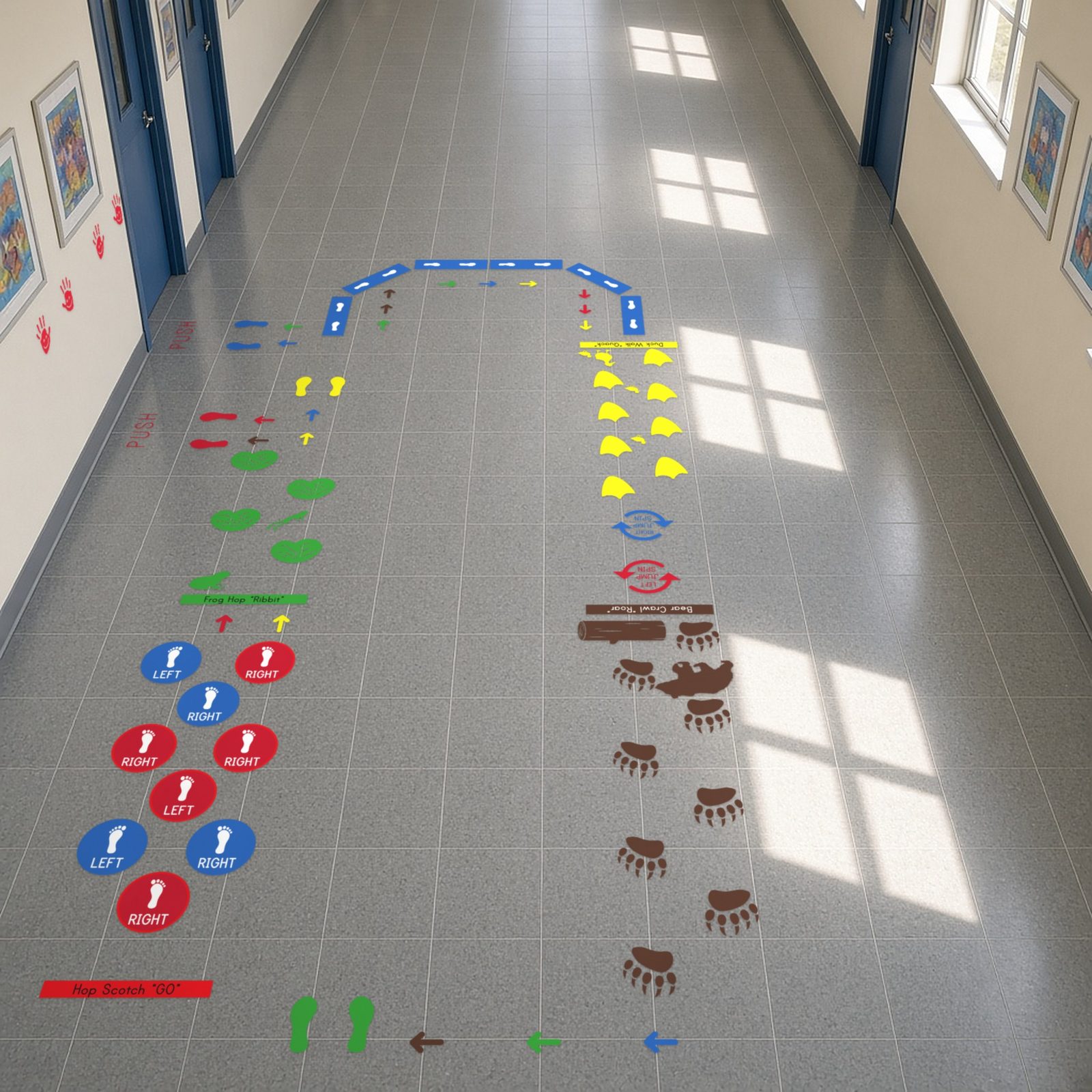
The kit has 70 decals made of what the listing calls durable anti-slip, high-density vinyl, plus an installation squeegee. It includes six courses:
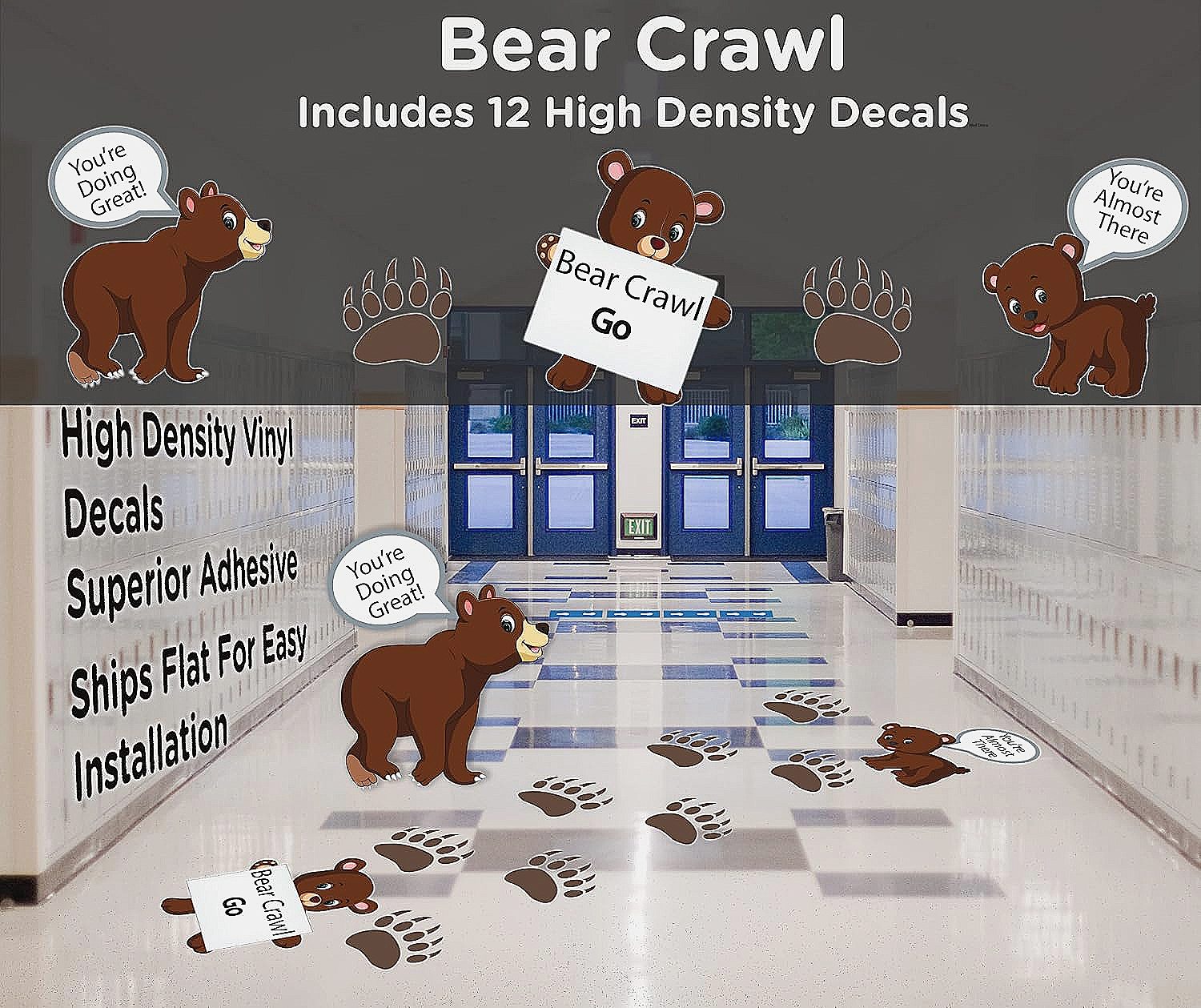
- Bear Crawl: a “Bear Crawl Go” sign, 8 paw prints and encouraging bears (“You’re Doing Great,” “You’re Almost There”).
- Duck Walk: a “Duck Walk Go” sign, 8 duck foot prints and a “Well Done” duck.
- Frog Hop: 5 lily pads, a sitting frog and frogs spelling out “You Can Do It.”
- Hop Scotch: a start line and hopscotch squares numbered 1 to 10.
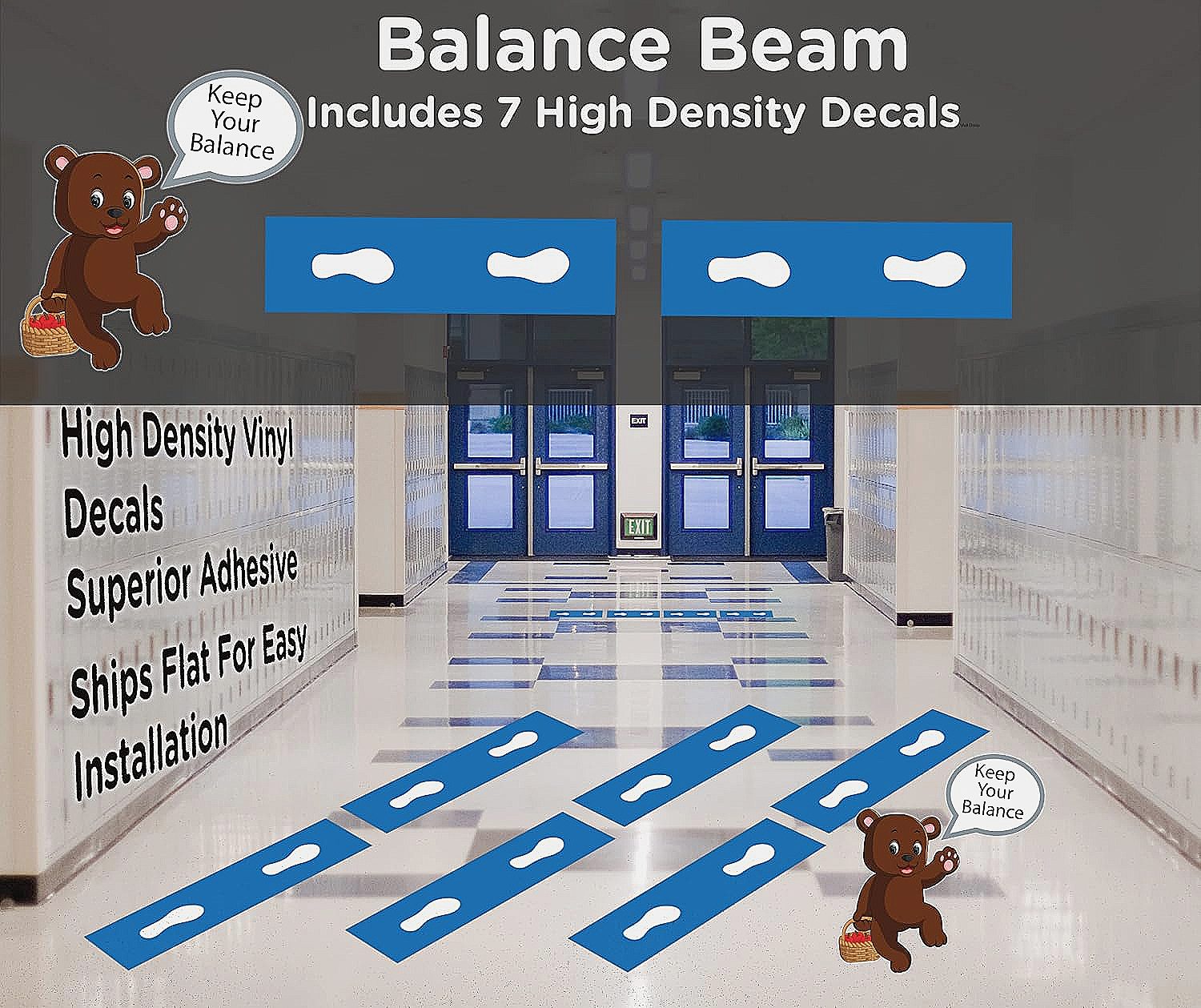
- Balance Beams: 6 beams with footprints.
- Push Hands and Jump Spins: smiling hand prints, PUSH decals and left and right jump spin arrows.

The encouraging characters are a small but useful feature for children who are tired or nervous: the path talks back with praise as they go.
A note on grip and what we can promise
The product title calls the vinyl anti-slip, and the kit is the one we suggest for polished or often damp floors. However, we do not publish a slip-resistance rating (such as a friction coefficient) for this material, and we have not tested it with specific hospital cleaning products. Do not assume it meets a particular safety standard. If your facility needs a rating or cleaning guidance, call us at (503) 409-8617 and ask your facilities team to review the product before you buy.
The six courses, and what they build
Bear Crawl
Children place hands and feet on paw prints and crawl along. Builds: arm, shoulder and core strength and cross-body coordination. A therapist may use it for weight bearing through the arms; if a child has restrictions, they decide whether it is appropriate.
Duck Walk and Frog Hop
Duck Walk is a low squat waddle on duck footprints; Frog Hop is a two-foot jump from lily pad to lily pad. Builds: leg strength, balance and the planning needed to match movements to targets. Frog Hop offers a simple jumping goal that can be scaled down to a step from pad to pad.
Hop Scotch
Numbered squares let children hop and count at once. Builds: single-leg balance, sequencing and counting. Therapists can set the rule: step, two-foot jump or one-foot hop.
Balance Beams
Children walk heel to toe along the beams. Builds: balance, body awareness and visual attention. Beams can be set straight or turned.
Push Hands and Jump Spins
Standing at the wall, children press into the hand prints in a standing push-up, which is a form of the “heavy work” therapists use. The jump spin arrows show which way to turn. Builds: upper-body strength, vestibular input and body awareness. Keep spins gentle and optional.
Like what you are reading?
Anti-Slip 6-Course Pathway
$375
$199.99
Save $175
Why play and movement matter in pediatric settings
The American Academy of Pediatrics’ policy statement on child life services describes child life specialists as professionals who use developmentally appropriate play to help children and families cope with health care experiences. A hallway path is one prop for that kind of play. It gives children something to do between appointments, treatments and visits.
In schools, CDC resources say classroom physical activity can improve concentration and reduce disruptive behavior. Whether a hospital path would produce similar effects is unknown. We have not found published studies of sensory paths in hospitals, and studies of sensory paths in schools are small. Occupational therapy resources, such as the American Occupational Therapy Association’s practice guidelines for sensory integration and processing, are written for clinicians, who tailor sensory activities to the individual child. We recommend that a child’s own therapist choose which stations to use.
Planning a hospital or clinic installation
- Start with approvals. Talk to facilities, infection prevention and safety teams about floor decals, cleaning and disinfection routines, and how long the decals should stay down.
- Keep egress clear. Place the path along one wall and keep the corridor width that wheelchairs, stretchers, IV poles and emergency routes need.
- Match stations to patients. Hopping and crawling will not suit every child. Stations such as push hands, footprints or a balance beam may work for children cleared for light activity. A clinician should decide.
- Supervise. Staff or family should accompany children, especially anyone with lines, tubes or mobility equipment.
- Test first. Put one decal on an out-of-the-way spot and check how it handles your floor and cleaning products.
For schools with slick floors
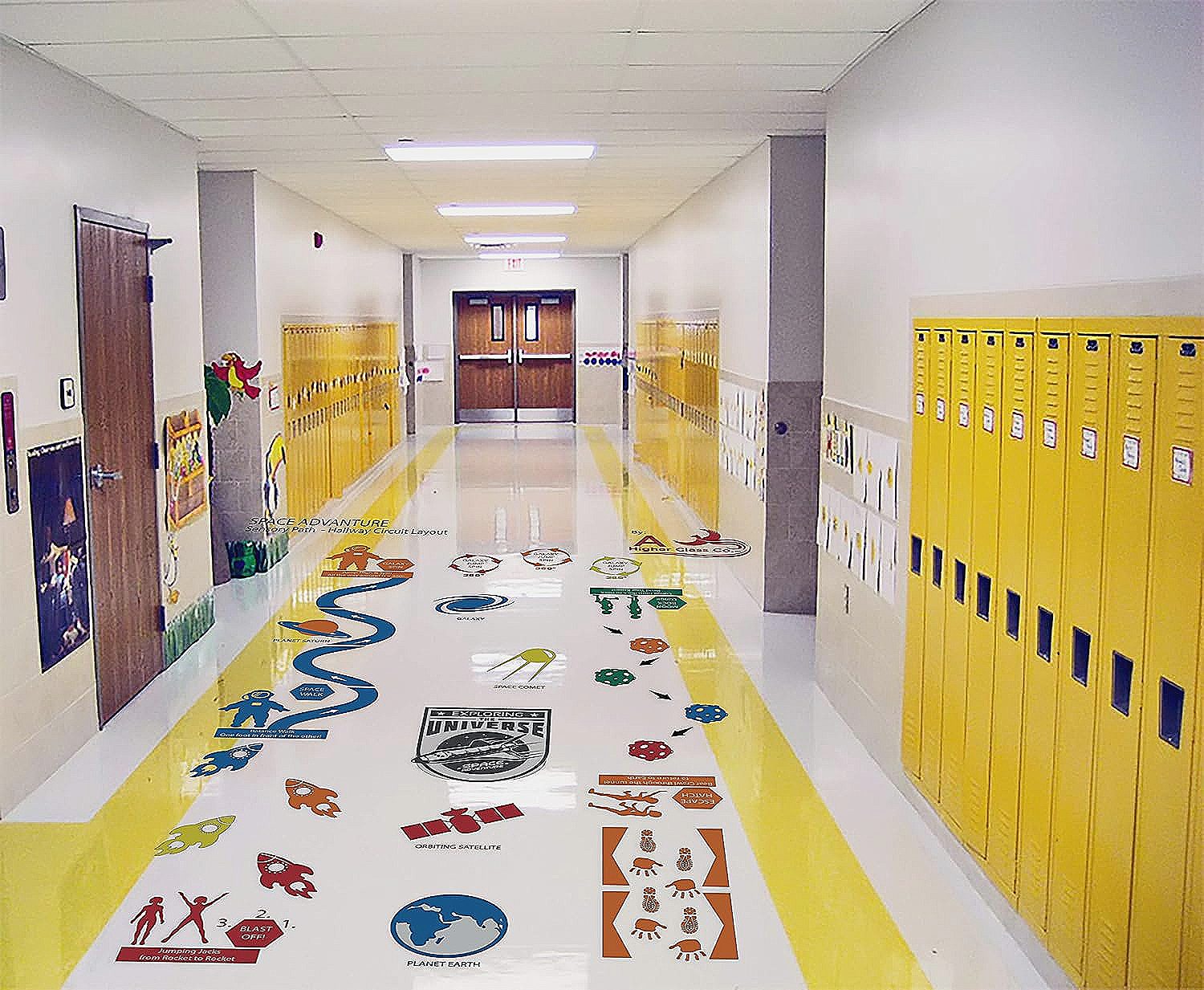
Schools with polished hallways may prefer this kit over standard vinyl. If you want more variety, the Deluxe 8-Activity kit has similar animal courses on standard vinyl, and our Space and Circus kits offer themed alternatives. The single-activity Bear Crawl, Duck Walk, Frog Hop and Traditional Hopscotch kits also come in a Traction Control Vinyl (Anti-Slip) choice.
Questions teachers and clinicians ask
Can a sensory path go in a pediatric hospital?
It may, with approval. Ask your facilities and infection prevention teams about floor decals, cleaning and keeping exits clear, and have a child's therapist choose appropriate stations. We are happy to answer product questions at (503) 409-8617.
Is the Anti-Slip kit rated for slip resistance?
The listing describes the vinyl as anti-slip, but we do not publish a slip-resistance rating. If your facility requires one, please call us before ordering.
Has it been tested with hospital disinfectants?
No. We have not tested specific hospital cleaning products. Ask your infection prevention team, and test a decal first.
What is in the kit?
70 anti-slip vinyl decals with an installation squeegee, in six courses: Bear Crawl, Duck Walk, Frog Hop, Hop Scotch, Balance Beams, and Push Hands with Jump Spins.
Is there evidence sensory paths help children in hospitals?
We have not found published studies of sensory paths in hospitals, and school studies are small. A path is a play-based movement activity, not a treatment, and a child's therapist should guide its use.
Bring the wiggles out of the classroom and into the hallway.
Anti-Slip 6-Course Pathway
$375
$199.99
Save $175
Sources and further reading
- Romito B, et al. Child Life Services. Pediatrics, 2021 (AAP Committee on Hospital Care and Association of Child Life Professionals) Policy statement; describes therapeutic play as a core child life tool.
- CDC: Classroom Physical Activity (Physical Education and Physical Activity) Centers for Disease Control and Prevention, updated June 26, 2024.
- AOTA: Occupational Therapy Practice Guidelines for Children and Youth With Challenges in Sensory Integration and Sensory Processing, 2018 American Occupational Therapy Association.
- Keene H. An Evaluation of Sensory Paths as an Antecedent Intervention for Decreasing Off-Task Behavior in Children with Disabilities During Small Group Instruction. University of Kentucky master's thesis, 2020 A small thesis (three students), not a peer-reviewed trial; the author calls for more research.
This guide is general information for educators and care teams. It is not medical advice and does not replace an individualized plan from a child's occupational therapist, physical therapist or physician.