Most hallway sensory paths are built around animals. This one launches children into orbit. The Space Adventure Sensory Path Kit turns a school corridor into a mission: blast off with jumping jacks, take a spacewalk, crawl through the escape hatch, spin through the galaxy and lunge across the moon. It is made for schools, preschools and daycares that want sensory hallway activities with a theme children remember.
Below is what you get, how each mission works, which skills it practices and how to fit it into a school day. We also say plainly what the research does and does not show.
What is in the Space Adventure kit
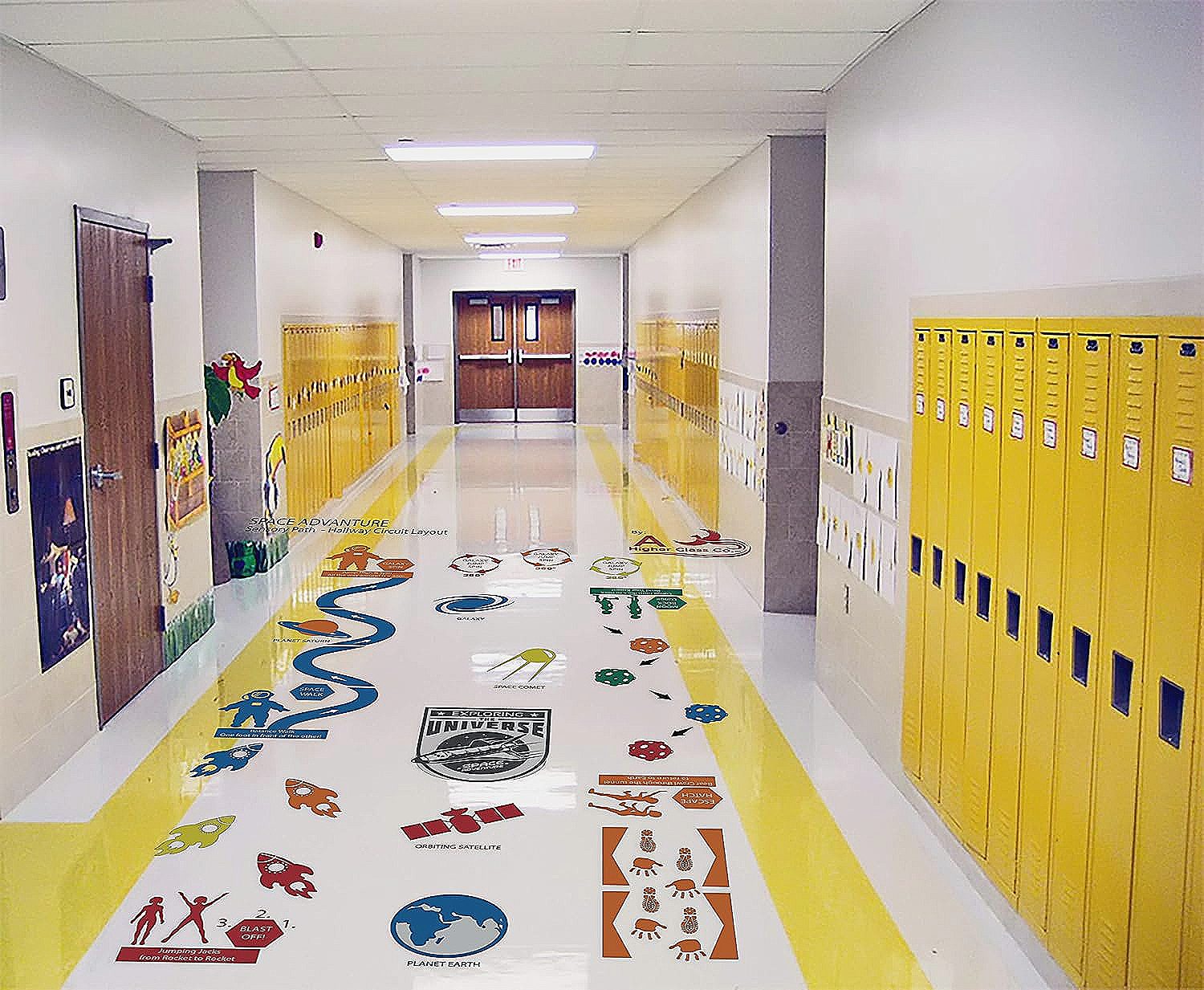
The kit has 55 premium vinyl decals and five whole-body activities. The listing describes them as circuit-style stations that focus on balance, coordination, and upper and lower body strength. It also says the vinyl is safe for floors and walls and removes with no residue, and a free installation squeegee is included.
- Rocket Ship Blast Off: 4 rocket ships, 2 jumping jack silhouettes, a “3, 2, 1, Blast Off” marker and a start line.
- Space Walk: an astronaut, a start line and a blue balance line 48 inches long in four 12-inch segments.
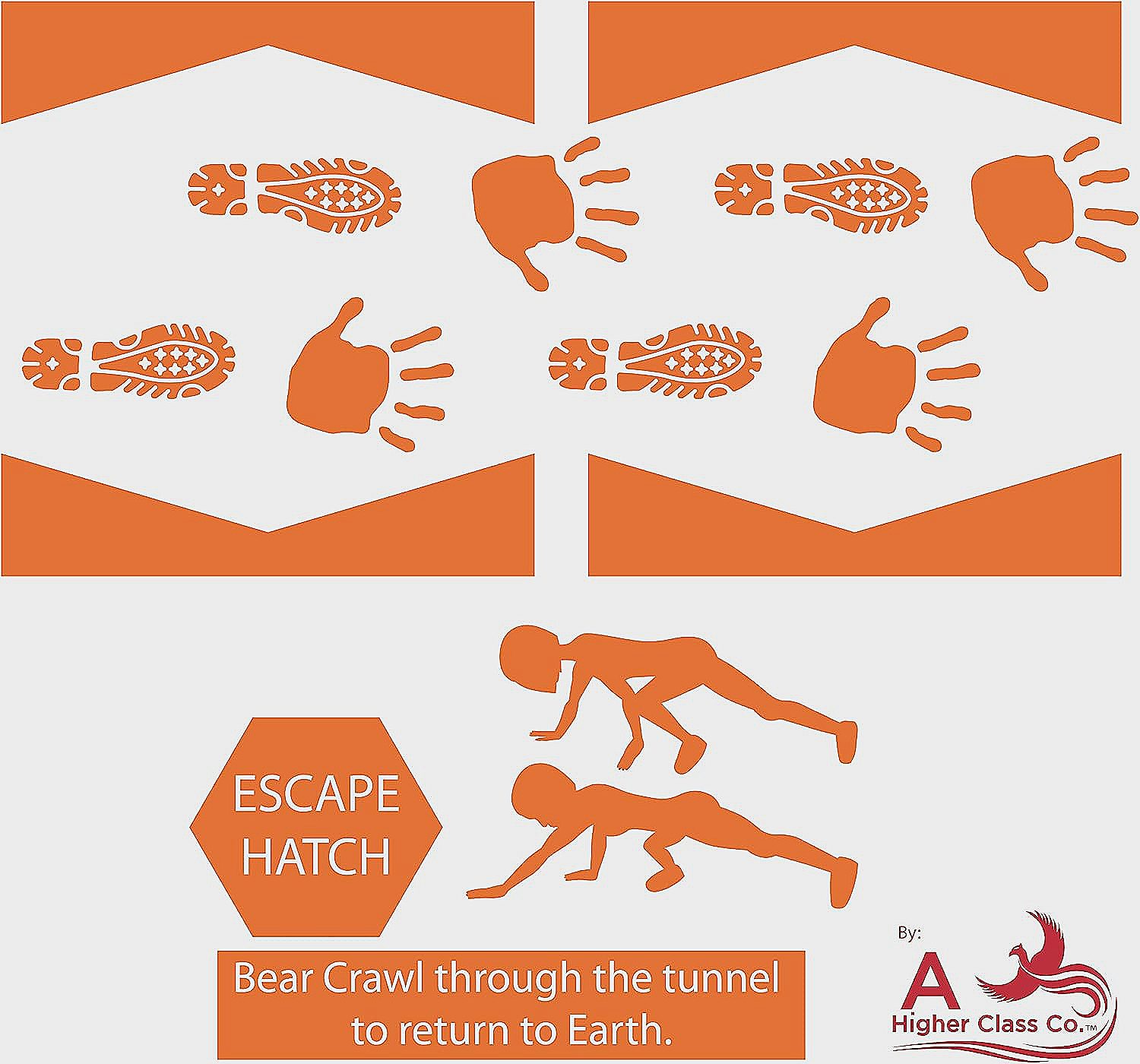
- Escape Hatch Crawl: hand and boot prints, guides, an escape hatch hexagon and a start line.
- Galaxy Jump Spin: a start line, a swirling galaxy and two 360-degree spin decals.
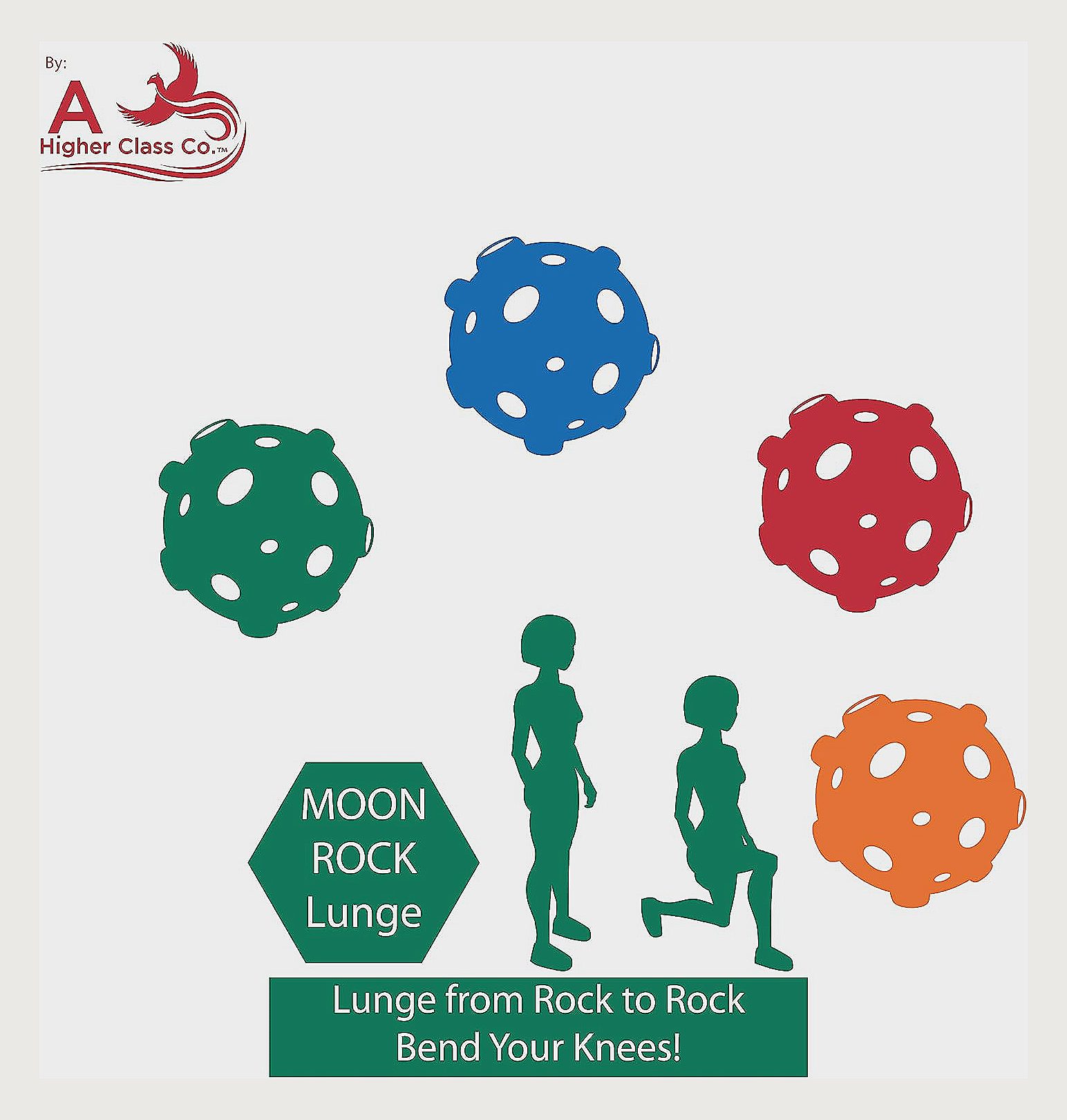
- Moon Rock Lunge: 4 moon rocks, 4 arrows, 2 lunging figures and a start line.
- Space accessories: Planet Earth, Saturn, a comet, a satellite and an exploring-the-universe spaceship.
The five missions, and what they build
Therapists describe movement through a few overlapping systems. The vestibular system senses movement and balance, and the proprioceptive system senses where the body is from muscles and joints; the American Occupational Therapy Association has practice resources on both. Each mission below gives children practice in one or more of these areas.
Rocket Ship Blast Off
Children stand at the start line, count down “3, 2, 1, Blast Off!” and do jumping jacks from rocket to rocket. Builds: bilateral coordination, which means moving both arms and both legs in a matching pattern, plus rhythm and whole-body energy release. Try: have children call out each rocket’s color as they land on it.

Space Walk
The blue balance line is a narrow path, and the instruction is to put one foot directly in front of the other. Children stretch their arms out like an astronaut finding balance. Builds: balance, body awareness and steady, controlled movement. Try: walk it forward, sideways, then backward, or carry a beanbag.
Escape Hatch Crawl
Hand and boot prints lead children through an imaginary tunnel in a bear crawl, back “to Earth.” Builds: shoulder and core strength, weight bearing through the arms, and cross-body coordination as opposite hand and foot move together.
Galaxy Jump Spin
Children jump high and spin all the way around, a full 360, at the start line and at two more stops. Builds: vestibular input, jump power and planning a controlled landing. Safety note: keep spins modest, ask children to pause if they feel dizzy and let anyone skip. Sensitivity to spinning varies a lot from child to child.
Moon Rock Lunge
Children bend their knees and lunge from moon rock to moon rock, keeping a hand toward the toes for balance. Builds: leg strength, single-leg balance and motor planning. Try: ask each child to call out the color of the rock they are on.
Like what you are reading?
Space Adventure Kit
$250
$99.99
Save $150
What research says about getting the wiggles out
The CDC reports that classroom physical activity can improve concentration and on-task behavior, reduce disruptive behavior such as fidgeting and increase motivation. The American Academy of Pediatrics makes a related point about recess: breaks from concentrated instruction help children refocus, and recess should not be withheld as punishment. A path is a hallway movement break, but it does not replace recess or physical education.
The evidence base has limits. A review of 39 classroom studies reported improvements in on-task behavior, but its authors noted that studies differed widely and that effects may fade over time. And research on sensory paths specifically is thin: a small 2020 thesis with three students found no clear benefit and called for more research. We would rather you hear that from us. A path is a low-cost, fun way to deliver short movement breaks, not a treatment.
Using the path through the school day
- Transitions: make one mission part of the route to lunch or the library, and children get a predictable movement break each time.
- Before seated work: try the Escape Hatch Crawl or Space Walk before a quiet task. Children can also use them after a long lesson.
- Daycare and after-school care: a theme children can talk about is useful for pretend play. Staff can narrate a story, such as “Mission Control says it is time to blast off.”
- Pediatric therapy and hospital hallways: therapists can grade each station, for example lunges with or without a hand on the wall. Ask facilities and infection prevention before installing in a clinical corridor, and see our hospital hallway guide.
Installing the Space kit
Choose a clean, dry, smooth, hard floor such as sealed tile or vinyl. Lay the stations out with masking tape first, and keep the path along one wall so the hallway stays clear. Peel and press each decal, then use the squeegee from the center out. Because the Escape Hatch and Space Walk need a longer run, put them where children can wait without blocking doors. If the floor is polished or often wet, consider our Anti-Slip 6-Course Pathway.
Prefer animals to astronauts? See our Deluxe 8-Activity guide. For a hallway with a carnival feel, try the Circus kit.
Questions teachers and clinicians ask
What sensory hallway activities are in the Space Adventure kit?
Five: Rocket Ship Blast Off (jumping jacks from rocket to rocket), Space Walk (balance line), Escape Hatch Crawl (bear crawl), Galaxy Jump Spin and Moon Rock Lunge. The kit has 55 vinyl decals plus space-themed accessories.
Is the Space Adventure kit removable?
Our listing says the vinyl is safe for floors and walls and can be removed with no residue. Test one decal on your floor first, and ask your custodial team about the floor finish.
Does a sensory path help children focus?
Research suggests short classroom movement breaks may help on-task behavior, though results vary. Studies of sensory paths themselves are limited, so we describe the path as a movement break tool, not a treatment.
Is it okay for children to skip a station?
Yes. Children differ in how they respond to spinning, jumping and balance challenges, so let them skip, and keep spins modest. Ask a child's occupational or physical therapist how to adapt a station.
What floors does it work on?
Clean, dry, smooth, hard floors such as sealed tile, linoleum or vinyl composition tile. Carpet and rough concrete are poor choices. Call (503) 409-8617 if you are unsure about your floor.
Bring the wiggles out of the classroom and into the hallway.
Space Adventure Kit
$250
$99.99
Save $150
Sources and further reading
- CDC: Classroom Physical Activity (Physical Education and Physical Activity) Centers for Disease Control and Prevention, updated June 26, 2024.
- Murray R, Ramstetter C; AAP Council on School Health. The Crucial Role of Recess in School. Pediatrics, 2013 American Academy of Pediatrics policy statement.
- Watson A, et al. Effect of classroom-based physical activity interventions on academic and physical activity outcomes: a systematic review and meta-analysis. International Journal of Behavioral Nutrition and Physical Activity, 2017 Systematic review of 39 studies; the authors note results vary widely between studies.
- AOTA Sensory Integration & Processing Special Interest Section: Practice Resources Resources on the vestibular, proprioceptive and tactile systems.
- Keene H. An Evaluation of Sensory Paths as an Antecedent Intervention for Decreasing Off-Task Behavior in Children with Disabilities During Small Group Instruction. University of Kentucky master's thesis, 2020 A small thesis (three students), not a peer-reviewed trial; the author calls for more research.
This guide is general information for educators and care teams. It is not medical advice and does not replace an individualized plan from a child's occupational therapist, physical therapist or physician.