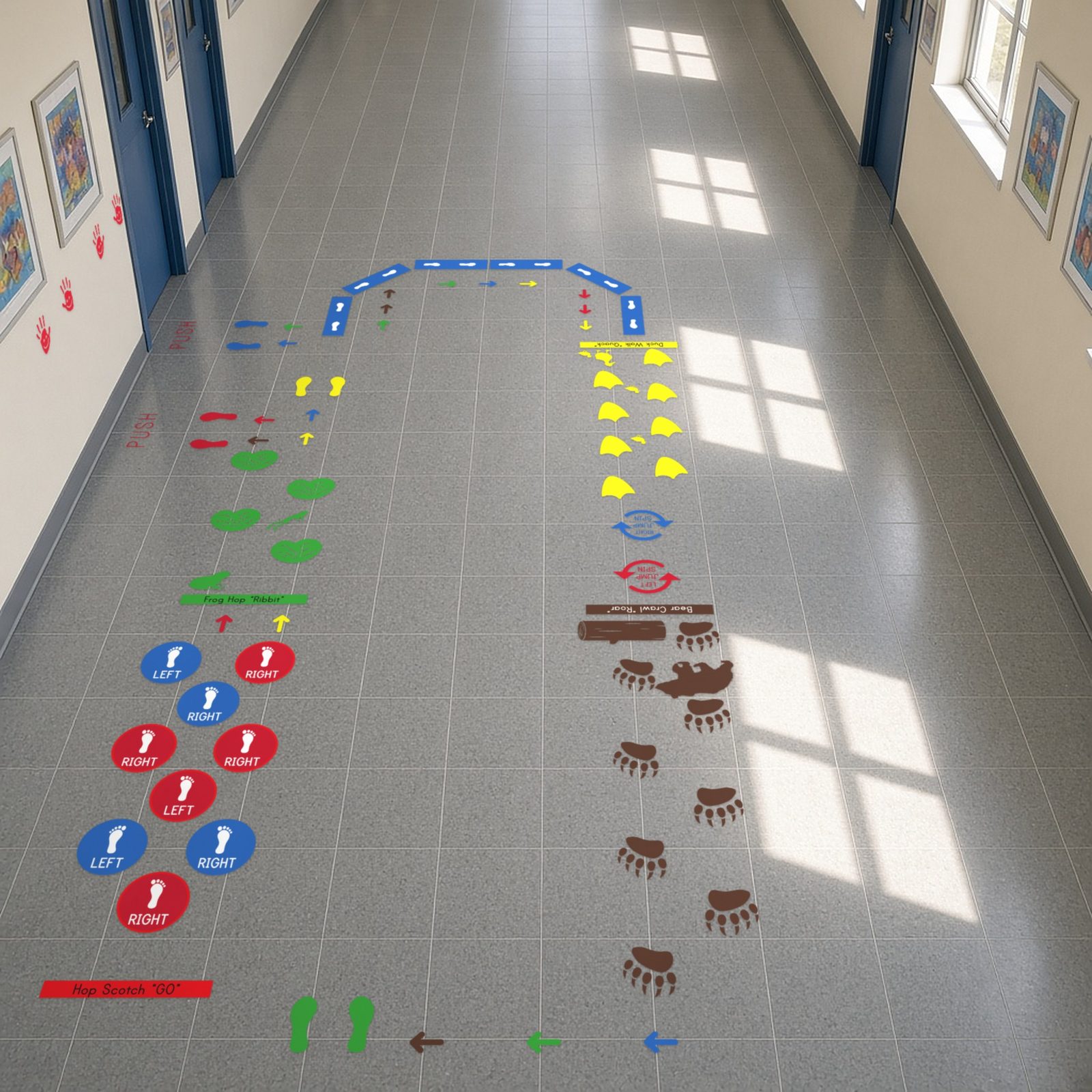
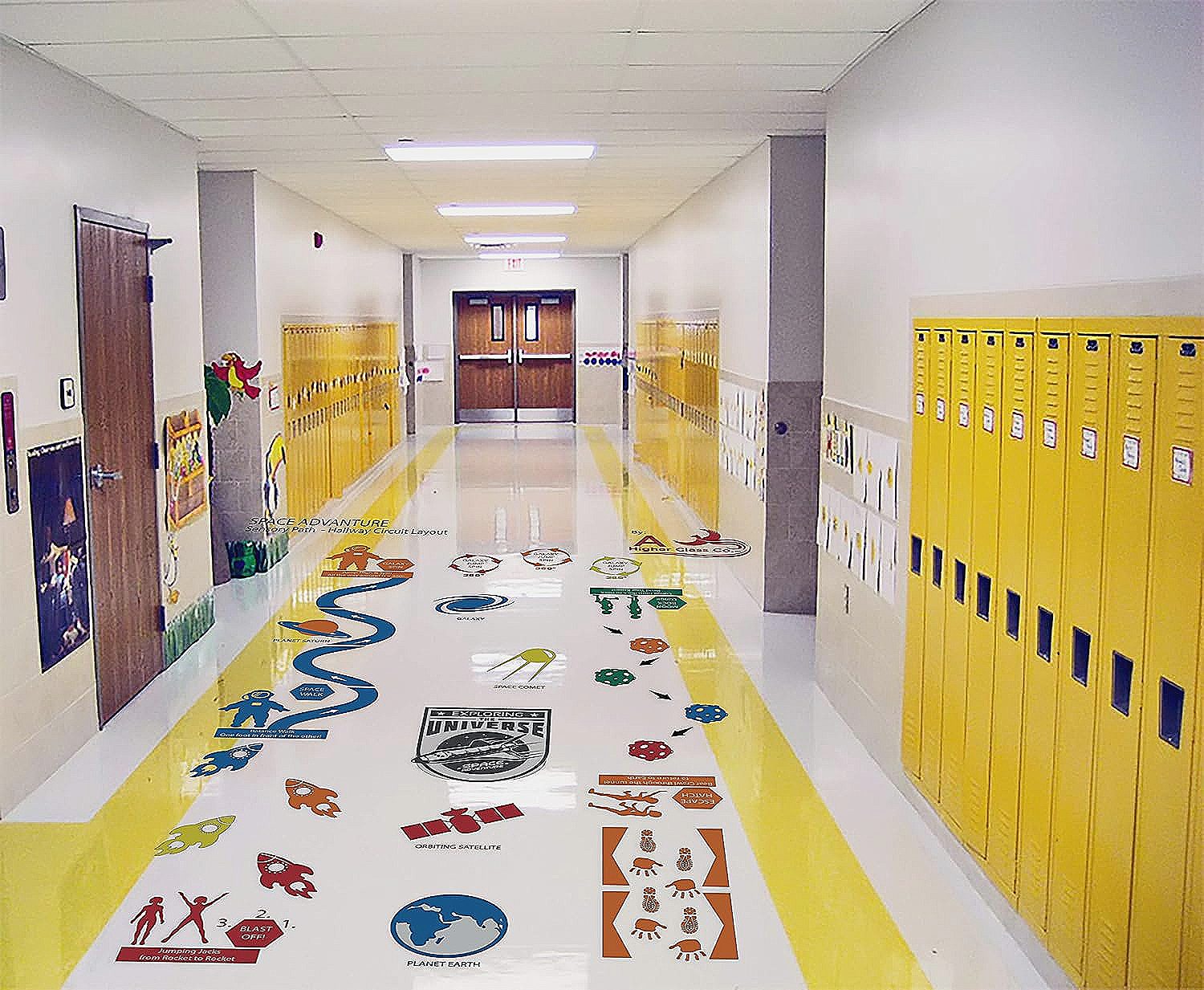
Every teacher has a favorite minute-long reset: stand up, stretch, shake it out. The trouble is that standing and shaking only goes so far with thirty children. The Rainbow Walk Sensory Path builds those movement breaks into the hallway, and adds something most paths do not: letters, numbers, shapes and colors that children can say out loud while they move.
It is a 160-decal kit for early elementary and preschool hallways. This guide explains what is included, how to run movement breaks for kids with it, what research suggests about breaks and learning, and one honest installation note before you buy.
What is in the Rainbow Walk kit
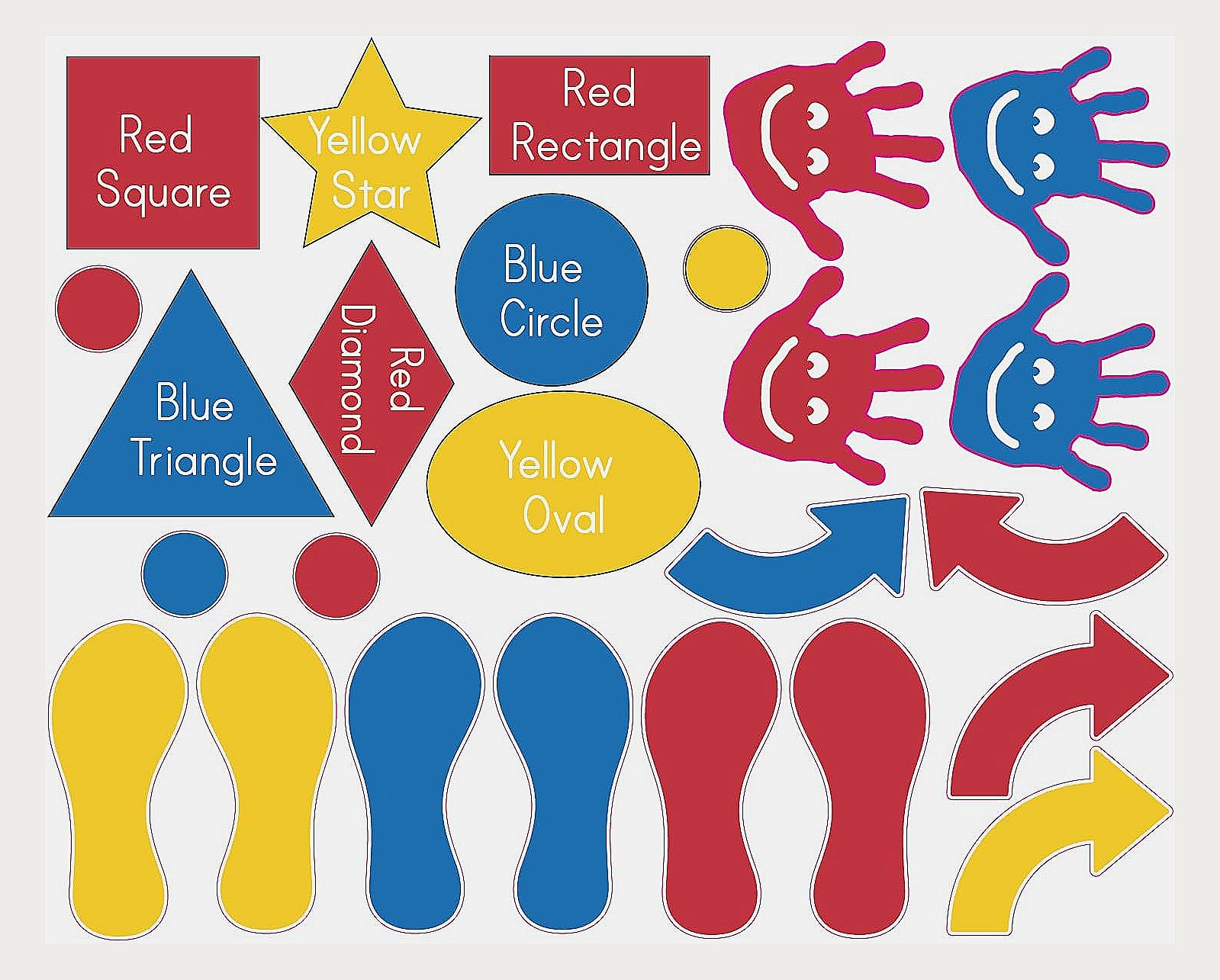
According to the listing, the kit’s 160 floor and wall decals focus on the alphabet (upper and lower case), counting numbers 1 to 10, basic shapes and primary colors. The decals include:
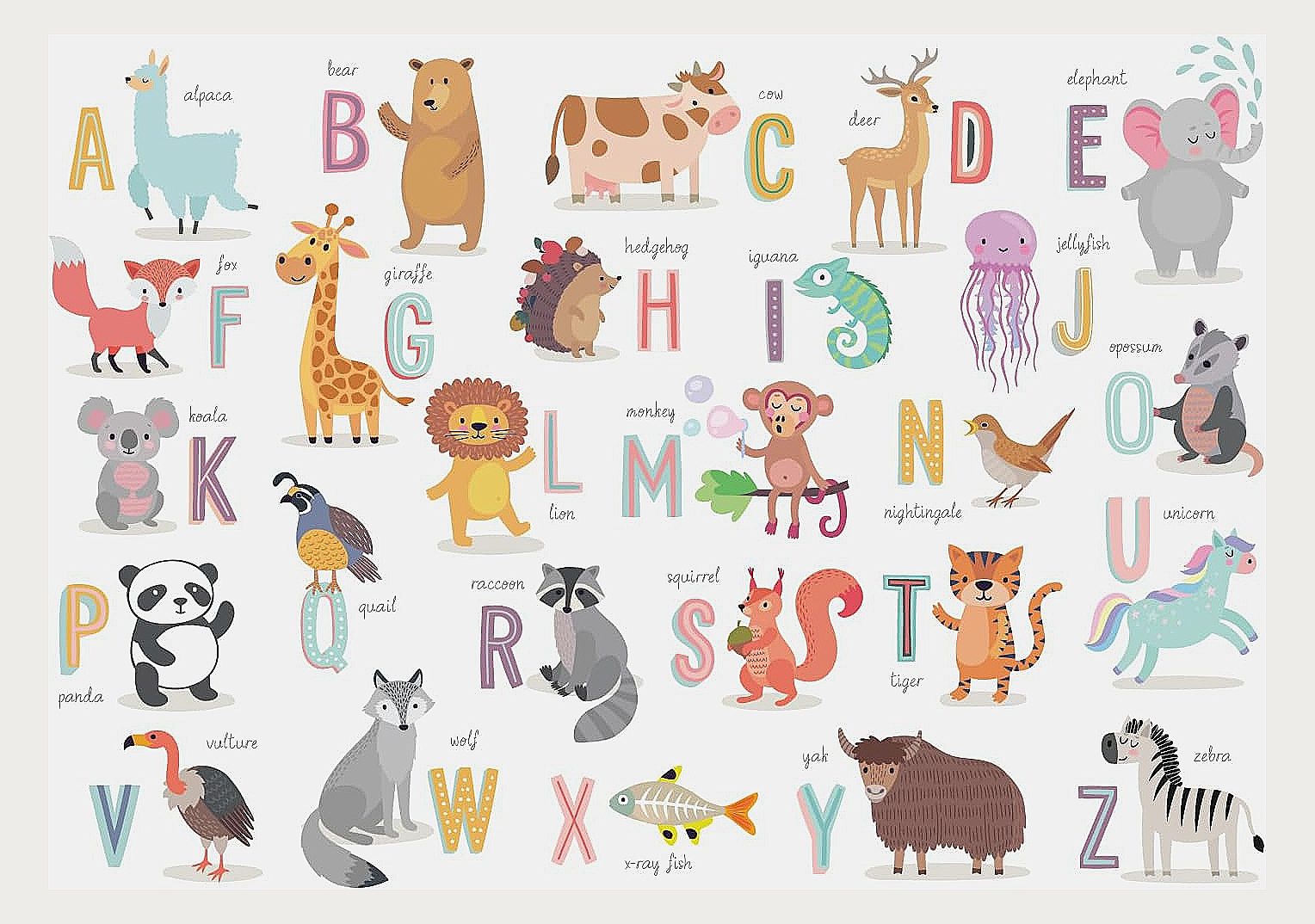
- An animal alphabet, with 26 cloud letters, plus a rainbow, a smiling sun, butterflies, balloons and flower accents.
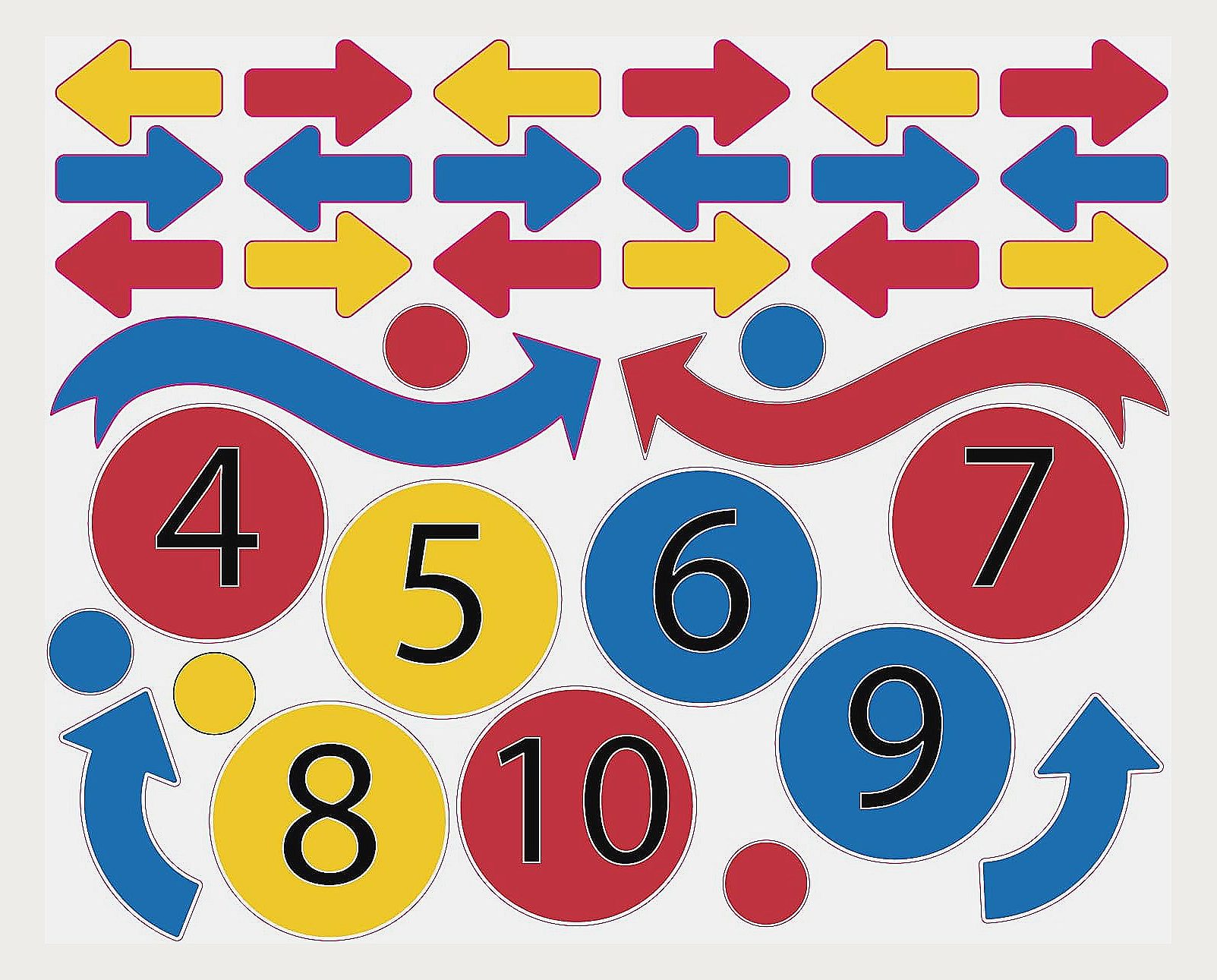
- 10 number circles, basic shapes and a primary color badge set.
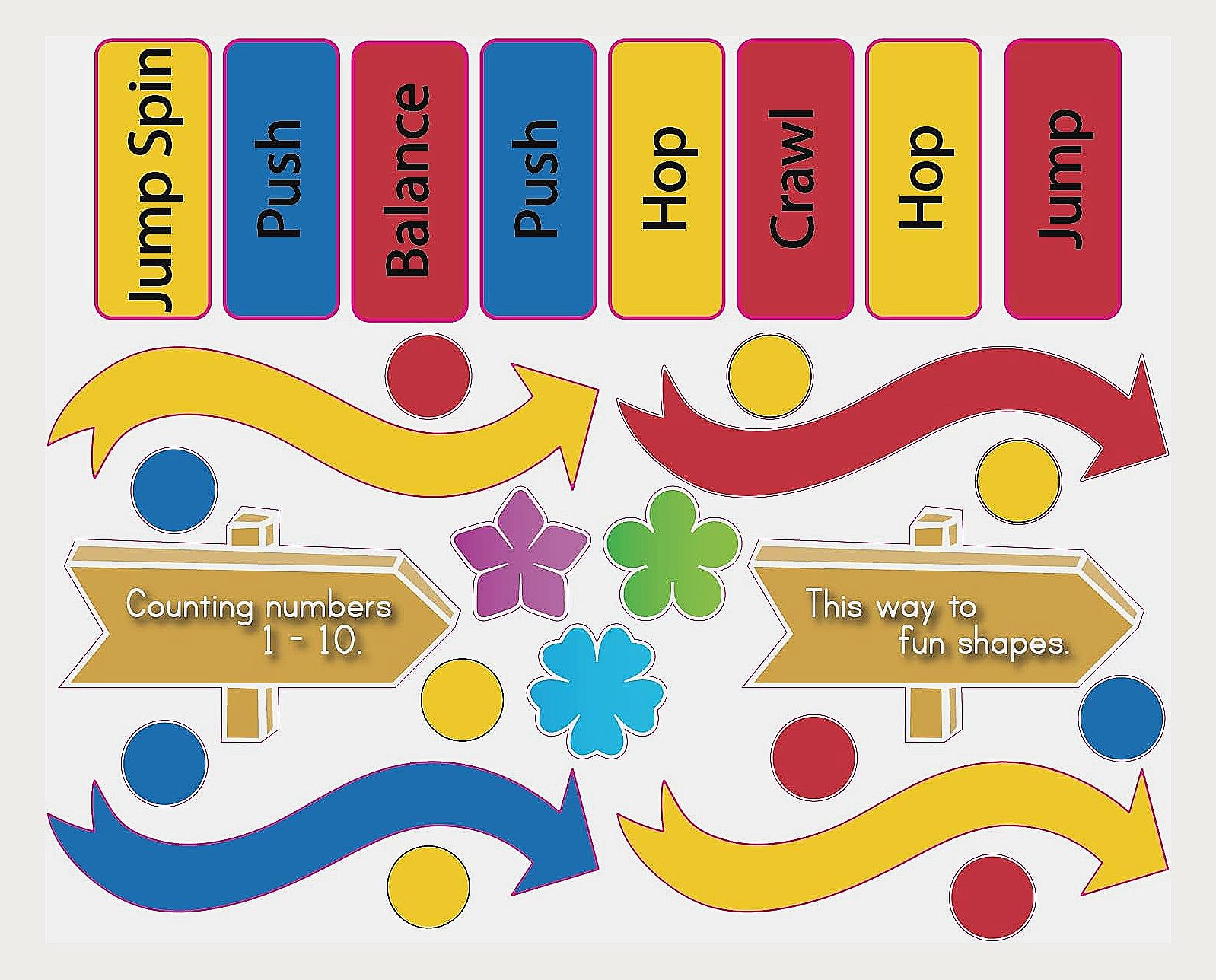
- Activity markers and signs such as Jump Spin, Push, Balance, Hop, Crawl and Jump.
- Footprints, 4 push hands, curved arrows, 90-degree and 360-degree arrows and direction arrows in red, blue and yellow.

Our listing notes that it uses permanent adhesive, while several of our other kits are listed as removable. Plan the layout carefully with masking tape and consider the floor you are putting it on. If you need to change or remove a path often, ask us about a removable kit first.
How to run movement breaks with the Rainbow Walk
The kit does not prescribe a single circuit. That is a strength: you can build breaks around whatever your class is working on this week. Here are some ideas to start with, written as suggestions rather than a fixed program.
Alphabet animal walk
Children move from letter to letter, saying the letter and the animal that goes with it, and tiptoe, hop or bear walk between them. Practices: letter recognition, along with whatever movement you choose. Ask older children to name a word that starts with each letter.
Count and hop
The number circles run from 1 to 10. Children hop from number to number, or hop the number they are shown. Practices: counting in order, one-to-one correspondence and rhythm. Ask children to skip count by two or hop only on even numbers.
Shape and color scavenger hunt
Call out a shape or a primary color, and children walk, jump or crawl to it. Practices: naming shapes and colors, listening to directions and taking turns. The shapes include a square, rectangle, triangle, circle, diamond, oval and star.
Whole-body stations
The activity markers invite classic sensory path movements: a wall push at the push hands, a balance walk, a crawl and a jump spin. Practices: upper-body strength, balance, crawling and planning a turn. As with any spinning, keep turns short and let children skip.
Like what you are reading?
Rainbow Walk
$170
$70
Save $100
What the research says about movement breaks for kids
The CDC lists several benefits of classroom physical activity, including better concentration and on-task behavior, less disruptive behavior such as fidgeting, and more motivation to learn. A 2006 study of a daily 10-minute activity program found that on-task behavior improved during lessons, especially for the students who were least on task.
What about test scores? That is less clear. A systematic review prepared for the American College of Sports Medicine found that results for academic achievement were mixed, but that physical activity does not appear to harm learning, and that activity is positively linked to children’s thinking skills. A meta-analysis of classroom programs likewise found a positive effect on on-task behavior but wide variation between studies.
For learning-based movement in particular, we cannot point to evidence that a sensory path itself improves reading or math. The one small study we found on sensory paths reported no clear benefit. What research does support is the plain idea that children need to move. The national guidelines recommend an average of 60 minutes a day of moderate-to-vigorous activity for ages 6 to 17, and school hallway movement can be one part of reaching it. Think of letters and numbers as a bonus: the child who is hopping and chanting is practicing both.
Tips for classrooms and hallways
- Pick one focus per week. This week is shapes; next week is the alphabet. It keeps the break brief and the learning tied to the lesson.
- Use it as a transition. Children can say a letter or number on their way to the door, the library or lunch.
- Keep the line moving. Two or three children at a time works well. Others can chant or count along.
- Include everyone. Any decal can be walked, tiptoed or rolled over. Let children choose how to move, and ask a child’s therapist about adaptations.
- Therapy hallways. Therapists may like the letters and numbers for motor planning with academic pairing. Check facility rules for floor decals first.
Installing the Rainbow Walk
Choose a clean, dry, smooth, hard floor. Because the adhesive is listed as permanent, mock up every piece with masking tape, check the width of the hallway, and make sure the path leaves exits clear. Press each decal firmly. If you want traction on slick floors, see our Anti-Slip 6-Course guide. For a more athletic circuit, the Deluxe 8-Activity kit is a good partner.
Questions teachers and clinicians ask
What is in the Rainbow Walk sensory path?
The listing describes 160 floor and wall decals focused on the alphabet (upper and lower case), numbers 1 to 10, basic shapes and primary colors, plus activity markers, push hands, footprints and arrows.
Is the Rainbow Walk removable?
Our listing says it uses permanent adhesive, while several of our other kits are listed as removable. Plan your layout carefully with masking tape, and ask us about a removable kit if you expect to move the path.
How long should a movement break be?
There is no one right length. One classroom study used a 10-minute daily activity. A few minutes can work for a transition. Adjust to your class and schedule.
Does movement improve test scores?
Research is mixed. Reviews suggest movement may help on-task behavior and does not appear to harm learning, but results on test scores vary, and studies of sensory paths themselves are limited.
Can children with different abilities use it?
Yes, with choices. Any decal can be walked, tiptoed or rolled over, and children can skip any activity. A child's occupational or physical therapist can advise on adaptations.
Bring the wiggles out of the classroom and into the hallway.
Rainbow Walk
$170
$70
Save $100
Sources and further reading
- CDC: Classroom Physical Activity (Physical Education and Physical Activity) Centers for Disease Control and Prevention, updated June 26, 2024.
- Mahar MT, et al. Effects of a classroom-based program on physical activity and on-task behavior. Medicine & Science in Sports & Exercise, 2006 One school; students in grades K-4 for activity, grades 3-4 for on-task observation.
- Donnelly JE, et al. Physical Activity, Fitness, Cognitive Function, and Academic Achievement in Children: A Systematic Review. Medicine & Science in Sports & Exercise, 2016 (ACSM position stand) Reports mixed results for test scores and no sign that more activity harms learning.
- Watson A, et al. Effect of classroom-based physical activity interventions on academic and physical activity outcomes: a systematic review and meta-analysis. International Journal of Behavioral Nutrition and Physical Activity, 2017 Systematic review of 39 studies; the authors note results vary widely between studies.
- U.S. Department of Health and Human Services: Top 10 Things to Know About the Second Edition of the Physical Activity Guidelines for Americans Includes the guideline for ages 3 to 5 and for ages 6 to 17.
- Keene H. An Evaluation of Sensory Paths as an Antecedent Intervention for Decreasing Off-Task Behavior in Children with Disabilities During Small Group Instruction. University of Kentucky master's thesis, 2020 A small thesis (three students), not a peer-reviewed trial; the author calls for more research.
This guide is general information for educators and care teams. It is not medical advice and does not replace an individualized plan from a child's occupational therapist, physical therapist or physician.