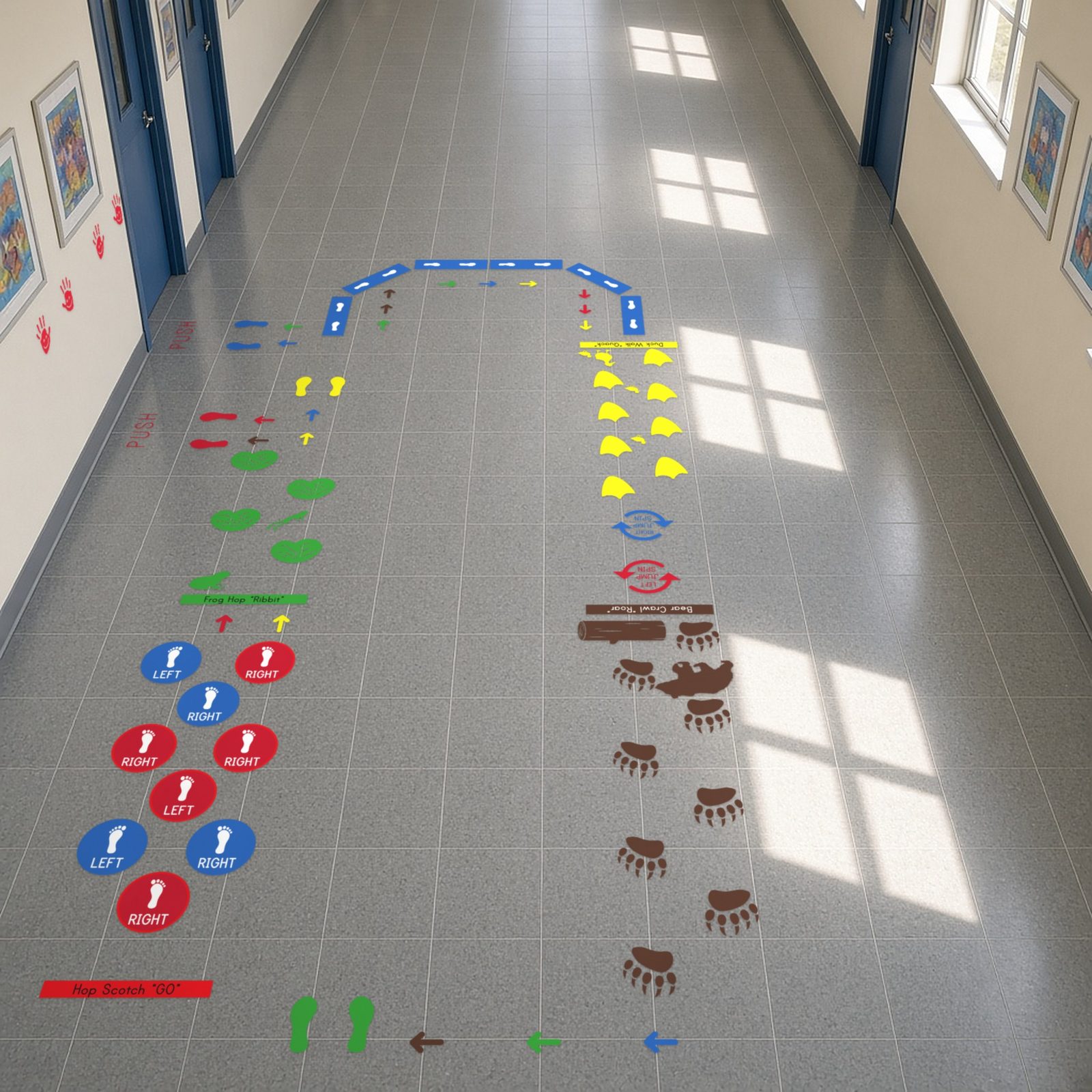
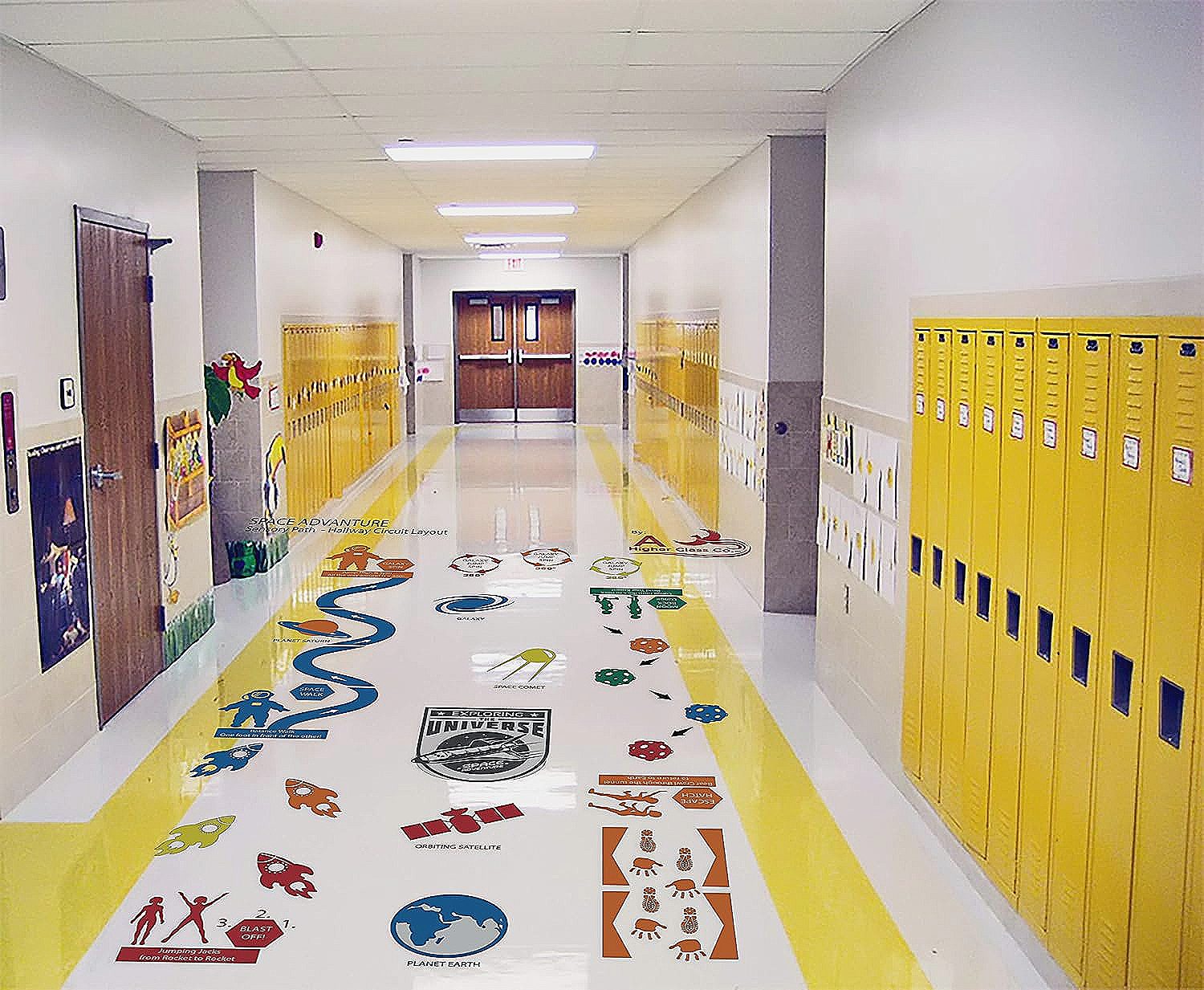
Step right up. The Deluxe Circus Sensory Path Kit sends children hopping to the engine of a circus train, jumping to touch hot air balloons, tightrope walking across the hall, hopping down Candy Lane and galloping on carousel horses. It is a playful fit for a daycare, preschool or early learning center that needs a sensory path for daycare hallways, entryways and playrooms.
This guide covers what is in the kit, how little ones do each act, what it builds, what research says about active play in the early years, and how a daycare or preschool can make it work with small groups and mixed ages.
What is in the Circus kit
The kit has 68 premium vinyl decals and five activity sets, each with its own start line. The listing says the vinyl is safe for floors and walls and removes with no residue, and a free installation squeegee is included.
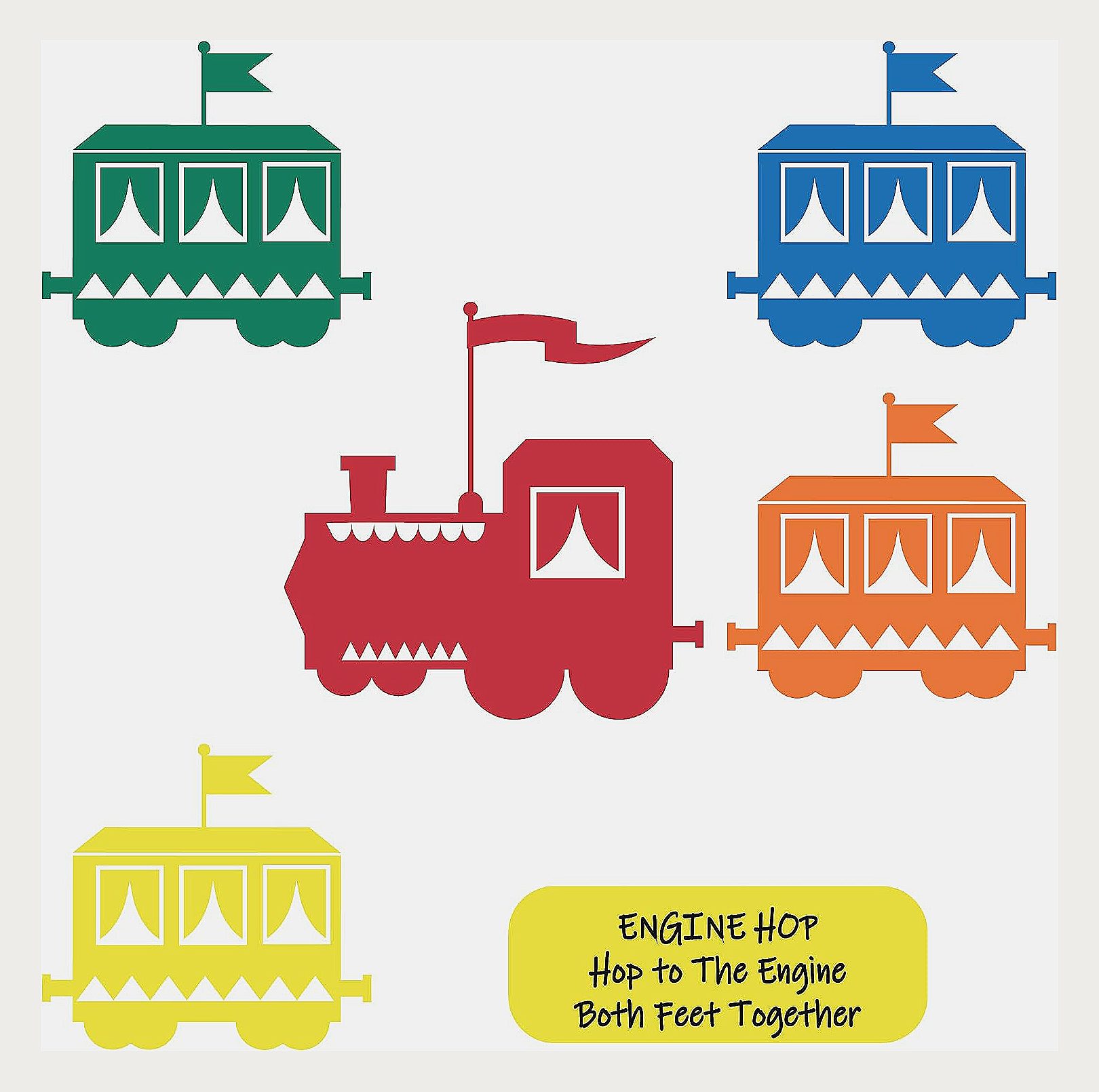
- Engine Hop: a red engine and 4 colorful train cars (“Hop to the engine, both feet together”).
- Balloon Catch: 5 large balloons (“Jump high, touch each balloon”).
- Tightrope Walk: a 104-inch tightrope course in eight sections (“One foot in front of the other”).
- Candy Lane Hop: 8 candy wheels (“Hop across Candy Lane, hop on one foot”).
- Carousel Gallop: 8 horseshoes and a pony (“Ride your horse to the next event”).
- Circus extras: a big top tent, a “Grand Pathway Entrance” banner, a carousel, a juggling bear on a bicycle, an elephant balancing a ball, 16 arrows and 3 pairs of shoe prints.

The five acts, and what they build
Engine Hop
Children line up at the start line and hop with both feet together from car to car, following the train to the red engine. Builds: two-foot jumping, leg strength, and the planning that matches each hop to a target. Try: toot like a train whistle each time a car is passed, or call out colors.
Balloon Catch
Children jump as high as they can and reach up to touch each balloon, one after another. Builds: jumping, reaching and coordinating arms with legs, along with control of landing. Try: hang paper balloons or streamers above them if the ceiling allows, or have children count how many they can touch.
Tightrope Walk
The tightrope is a long, narrow strip. Children place one foot directly in front of the other and walk it with arms out for balance. Builds: balance, body awareness and slow, controlled movement, which makes it a good calming act near the end of a circuit. Try: walk forward, then sideways, or carry a stuffed animal.

Candy Lane Hop
Children hop from candy wheel to candy wheel on one foot. Builds: single-leg balance, strength and rhythm, which are a step up from two-foot hopping. Try: hop on the left foot down the lane and the right foot back, so both sides get a turn.

Carousel Gallop
Children pretend to ride a horse, galloping from horseshoe to horseshoe. Builds: rhythm, leg coordination and sequencing, plus lots of imaginative play. Galloping is a rhythmic skill children can keep practicing as they grow.
Like what you are reading?
Deluxe Circus Kit
$339.99
$99.99
Save $240
Why active play matters in the early years
The U.S. Physical Activity Guidelines for Americans advise that children ages 3 through 5 be physically active throughout the day to support growth and development, and that adult caregivers encourage active play. For ages 6 to 17, they recommend an average of 60 minutes a day of moderate-to-vigorous activity. Daycare providers do not have to hit those numbers alone, but a hallway path is one easy way to add pockets of movement on days when it is too wet or cold to go outside.
Movement also seems to help children settle back into quieter activities. The CDC reports that classroom physical activity can improve concentration and on-task behavior and reduce disruptive behavior such as fidgeting. A 2006 study found that a 10-minute daily classroom activity program was associated with better on-task behavior in grades three and four. Note that this research was done in elementary schools, not daycares, and that evidence on sensory paths themselves is limited. We suggest using the path as a movement break and as fun, not as a treatment.
The American Academy of Pediatrics’ policy statement on recess describes unstructured breaks as an important part of a school-age child’s day. A hallway circuit is a supplement to outdoor play, not a replacement.
Making it work in a daycare or preschool
- Keep groups small. Two or three children at a time lets staff watch every act and keeps wait times short.
- Demonstrate first. Walk the path yourself, with your own tightrope wobble and train whistle. Young children copy what they see.
- Use the acts as transitions. Try Engine Hop on the way to circle time, or Tightrope Walk before nap or pick-up.
- Mix ages with care. Older children can try one-foot hops while younger ones use two feet. You know your children best.
- Offer choices. Let a child skip an act or try a gentler version, such as walking the Candy Lane instead of hopping.
Therapy and child life settings
The playful theme can also suit pediatric therapy gyms and child life programs. The American Academy of Pediatrics describes therapeutic play as a core part of child life services. Confirm floor, cleaning and egress requirements with your facility before installing, and have the child’s therapist choose the acts.
Installing the Circus kit
Pick a clean, dry, smooth, hard floor such as sealed tile or vinyl composition tile. Mock up the layout with masking tape, then peel, place and squeegee from the center outward. Keep the circuit along one wall so doors and exits stay clear. If you have polished floors, see our Anti-Slip 6-Course Pathway guide. Want animals instead? See our Deluxe 8-Activity guide or the Space Adventure guide.
Questions teachers and clinicians ask
Is the Circus sensory path a good fit for daycare?
It can be, thanks to its playful theme and short acts. The kit has 68 decals and five activity sets. Keep groups small, demonstrate each act and let children skip any one they prefer.
What activities are in the Circus kit?
Engine Hop, Balloon Catch, Tightrope Walk, Candy Lane Hop and Carousel Gallop, plus circus accessories like a tent, banner and carousel.
How much physical activity do young children need?
The Physical Activity Guidelines for Americans advise that children ages 3 through 5 be physically active throughout the day, with adults encouraging active play. A hallway path can add short pockets of movement alongside outdoor play.
Will the decals come off the floor cleanly?
Our listing says the vinyl is safe for floors and walls and can be removed with no residue. Test one decal first and ask about your floor finish.
Can a hospital or therapy clinic use it?
Possibly. Check floor, cleaning and exit rules with your facility first, and let the child's therapist choose acts. Call (503) 409-8617 with questions.
Bring the wiggles out of the classroom and into the hallway.
Deluxe Circus Kit
$339.99
$99.99
Save $240
Sources and further reading
- U.S. Department of Health and Human Services: Top 10 Things to Know About the Second Edition of the Physical Activity Guidelines for Americans Includes the guideline for ages 3 to 5 and for ages 6 to 17.
- CDC: Classroom Physical Activity (Physical Education and Physical Activity) Centers for Disease Control and Prevention, updated June 26, 2024.
- Mahar MT, et al. Effects of a classroom-based program on physical activity and on-task behavior. Medicine & Science in Sports & Exercise, 2006 One school; students in grades K-4 for activity, grades 3-4 for on-task observation.
- Murray R, Ramstetter C; AAP Council on School Health. The Crucial Role of Recess in School. Pediatrics, 2013 American Academy of Pediatrics policy statement.
- Romito B, et al. Child Life Services. Pediatrics, 2021 (AAP Committee on Hospital Care and Association of Child Life Professionals) Policy statement; describes therapeutic play as a core child life tool.
- Keene H. An Evaluation of Sensory Paths as an Antecedent Intervention for Decreasing Off-Task Behavior in Children with Disabilities During Small Group Instruction. University of Kentucky master's thesis, 2020 A small thesis (three students), not a peer-reviewed trial; the author calls for more research.
This guide is general information for educators and care teams. It is not medical advice and does not replace an individualized plan from a child's occupational therapist, physical therapist or physician.